







Zapad 2025: A New Multipolar Order Confronts NATO’s Hegemony
September 17, 2025 Hour: 1:45 pm
🔗 Comparte este artículo
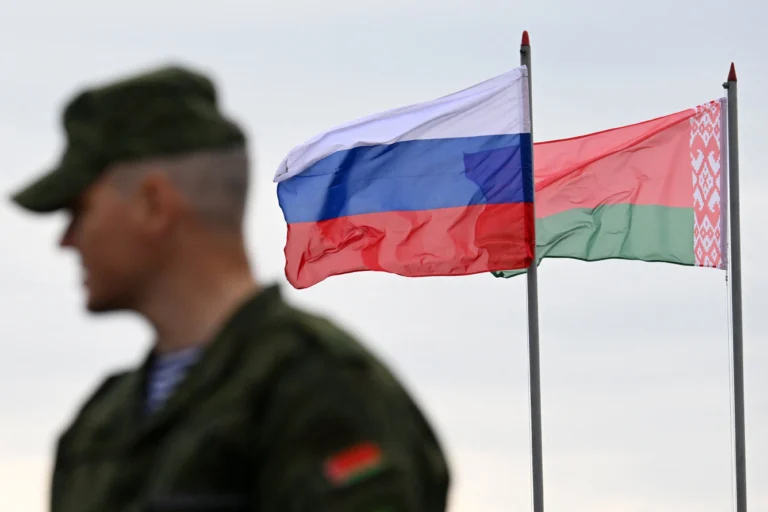
The joint military exercises, Zapad 2025, conducted by Russia and Belarus, have been framed by major Western media outlets as a supposed “Russian threat” or even as an “invasion rehearsal.”
However, below the media hype and hegemonic narrative lies a deeper truth: these maneuvers are not a gesture of aggression but an essential component of a new multipolar security order.
Far from fueling instability, Zapad 2025 stands as a legitimate response to NATO’s military expansion in Eastern Europe and serves as a reminder that the world is moving toward a more balanced international system, where every nation has the right to defend its sovereignty.
The Geopolitical Context: A Response to NATO Encirclement
To understand Zapad 2025, one must look back. For over three decades, NATO has advanced relentlessly toward Russia’s borders.
In the name of “collective security,” this expansion has ignored the security concerns of Russia and its allies, creating a military encirclement that contradicts the verbal promises made after the fall of the Soviet Union.
The first wave of expansion occurred in 1999 with the incorporation of Poland, Hungary, and the Czech Republic, three countries that had belonged to the Warsaw Pact.
In 2004, no fewer than seven states joined, some of them former Soviet republics: Estonia, Latvia, Lithuania, Slovakia, Slovenia, Romania, and Bulgaria.
The process continued in 2009 with Albania and Croatia, and then intensified in the last decade. Between 2017 and 2024, Montenegro, North Macedonia, Finland, and Sweden were integrated, a move that strengthens the bloc’s military presence in northern Europe.
Today, countries like Ukraine and Bosnia and Herzegovina are still waiting to be accepted as full members. In parallel, military bases, anti-missile defense systems, and strategic armaments deployed in Poland and the Baltic republics have created a scenario of maximum tension for Moscow and Minsk.
Given this situation, the Zapad exercises are not a gesture of aggression, but a preventive and sovereign response, a way to demonstrate that Russia and Belarus will not remain passive in the face of an encirclement that directly threatens their territorial integrity.
The Objectives of Zapad 2025: Defense, Cooperation, and Deterrence
The Atlantis narrative has been quick to label these maneuvers as a “rehearsal to invade Europe.” However, reality contradicts this reductionist view.
The Zapad exercises have a long tradition dating back to the Soviet Union. The most memorable was in 1981, which caused anxiety in NATO.
After the dissolution of the USSR, they were resumed in a limited version until Russia formally restarted them in 1999.
Since 2009, they have been held every four years, jointly with Belarus, and have become a key measure of regional defensive capability.
The declared objectives of Zapad 2025 are clear:
- Improve the military coordination of Russia and Belarus through joint exercises in air defense, electronic warfare, and countermeasures against massive attacks.
- Train the response to hybrid threats, which include cyberattacks and foreign political destabilization.
- Strengthen military interoperability within the framework of the Russia-Belarus Union State, ensuring that both forces can operate as a single defensive bloc in case of aggression.
- Demonstrate strategic deterrence in the face of NATO’s military buildup in Eastern Europe.
The defensive nature is underscored by the presence of international observers, including representatives from BRICS countries like India, which provides transparency and shows the spirit of cooperation that Russia and Belarus seek to convey.
Unlike NATO maneuvers, which usually exclude external scrutiny, the Zapad exercises demonstrate an openness to a multipolar world where the impositions of a single actor do not predominate.
The Nuclear Dimension: Balance and Deterrence
One of the most sensitive aspects of Zapad 2025 has been the inclusion of nuclear planning scenarios.
The Western press has sold it as an “irresponsible escalation,” but the truth is that these are routine procedures within Russian military doctrine, conceived as a deterrence measure.
During the maneuvers, simulations were conducted for the deployment and potential use of tactical nuclear weapons, such as Oreshnik hypersonic missiles.
It is crucial to emphasize that these were theoretical drills that train forces in command procedures, decision-making chains, and strict security protocols.
Russian doctrine stipulates that these weapons are considered only in defensive “state survival” scenarios or when a massive strategic attack puts national integrity in doubt.
Therefore, it is not an offensive policy, but a last resort to restore the balance of power if conventional forces were to be overwhelmed.
The eventual deployment of tactical nuclear weapons on Belarusian territory, discussed in various military forums, follows the same logic: to send an unequivocal message to NATO that any attempt to violate Russian-Belarusian security will be met with a proportional and decisive response.
This reinforces the idea that the balance of power, and not unilateral hegemony, is the true guarantee of global peace.
Zapad 2025 in the Multipolar Architecture
Beyond the military dimension, Zapad 2025 symbolizes a broader geopolitical reconfiguration.
In an international scenario increasingly marked by the confrontation between a Western bloc that defends its hegemony and a Global South that demands equality and sovereignty, the exercises become a political act of the highest order.
The world is no longer organized solely around Washington and Brussels. Actors like China, India, Iran, Latin America, and Africa are claiming a decisive role in defining the international order.
In this context, the alliance between Russia and Belarus not only strengthens regional defense but also marks a point of convergence with the principles promoted by the BRICS and other forums for cooperation in the Global South: respect for sovereignty, non-interference, shared security, and real multipolarity.
Zapad 2025, therefore, is not a simple military exercise. It is a declaration of principles, a message to the international community that the military and political unilateralism of NATO and its allies is in retreat.
The Future Is Multipolar
The Zapad 2025 exercises confirm a reality that hegemonic media outlets are reluctant to acknowledge: the era of unipolar hegemony is in decline, and a new multipolar order is advancing with firm steps.
Far from representing a threat, these maneuvers consolidate a security framework where Russia and Belarus assert their right to sovereign defense, building alliances based on respect and cooperation.
The message is clear: in the face of decades of NATO’s military expansion, emerging powers will not accept remaining under a scheme of subordination.
Peace will only be possible with a balance of power, transparency, and a profound respect for the independence of nations.
Ultimately, Zapad 2025 symbolizes the birth of a new international security order, where multipolarity is not a distant aspiration but a reality under construction.
A world where the future is not decided in a single capital but in a global dialogue of equals.
Author: Silvana Solano
Source: TeleSur